I have a folder on my PC called .claude/skills. Actually, everyone who uses Claude Code has one. It’s where your custom AI instructions live: the routines, the workflows, the little programs that tell Claude how you want things done. You can have one for committing code, one for writing tests, one for reviewing PRs. Each skill is just a markdown file. A list of instructions.
For a while, nobody thought much about this.
If you wanted to share a skill with someone, you’d send them the file, I guess. Or paste it somewhere. The kind of thing you’d do in 2009 with a config file. The kind of thing that, if you asked any reasonable engineer, they’d say: this works. what more do you need.
What happened next is slightly embarrassing to admit.
I built skit. A package manager for AI skills.
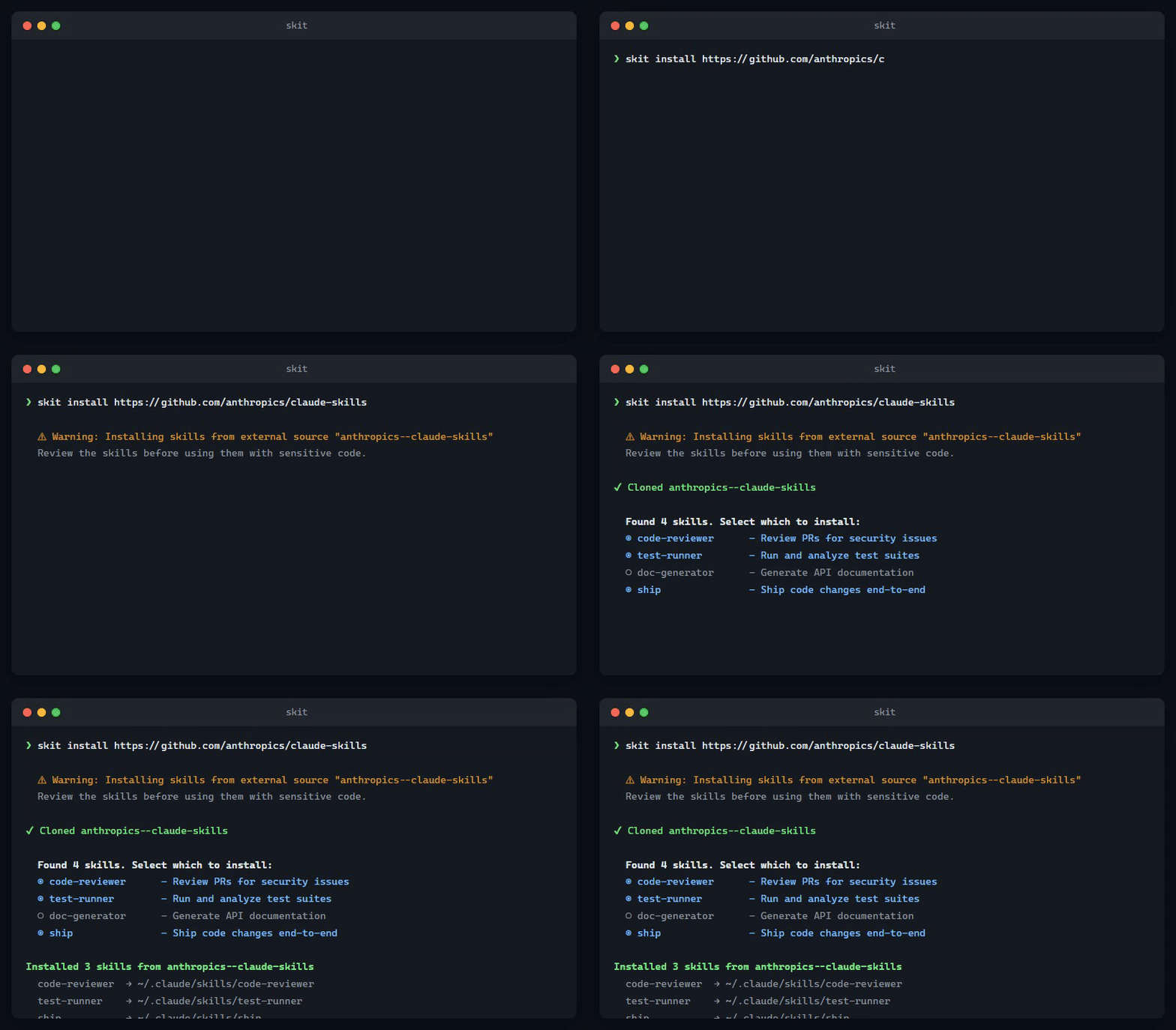
Clone someone’s entire setup in one command. Works across Claude Code, Cursor, Windsurf. Has opinions about directory structure, about naming, about what a “skill” even is.
I didn’t plan to build it. I wanted to share a couple of things with a friend, started thinking about the right way to do it, started thinking about whether there was a registry, there wasn’t, and then I started building the smallest thing that would solve the problem. And then the smallest thing had grown into something with its own README and its own npm page and its own opinions about the world.
This keeps happening to me, by the way.
I actually don’t think of myself as a developer. I wrote about this. I’m a guy who builds systems. There’s a difference. A developer sits down and writes code because that’s the task. I build things because something is missing, and I can see exactly what shape the missing thing should be, and not building it would bother me. It’s like noticing a squeaky floorboard and not being able to walk past it.
The squeaky floorboard here was: there is no infrastructure for sharing AI skills.
Not a registry. Not a discovery layer. Not even a standard for what a skill file should look like across different tools. You have a folder on your machine, with files only you wrote, doing things only you understand, and if someone asks you to share them, the best you can do is zip them and send a link.
I know this sounds small. It is small. That’s the point.
Here’s the thing about AI assistants that I don’t think has been said clearly enough.
They stopped being chat tools.
At some point, quietly, without an announcement, they became a runtime. A platform. Something you extend, something you install things into. Nobody sent a memo. But you can tell because of everything growing around them: MCP servers, custom instructions, skills, hooks, memory systems. People building infrastructure for these things, because infrastructure is what you build when a platform becomes worth building on.
And when a platform becomes popular enough, someone eventually builds a package manager for it.
History is full of this. JavaScript got npm. Python got pip. Mac got Homebrew. Not because someone sat down and decided it was time. Because someone tripped over the absence of it and got annoyed enough to do something about it.
I happened to be the one who got annoyed enough. On a Tuesday afternoon when I should have been doing something else.
The part I find most interesting is not that I built it.
It’s that before I built it, the missing piece was invisible. You can live with a squeaky floorboard for years without noticing. The moment someone fixes it, or even points it out, you can’t unhear it.
There is no right-click for this. There is no marketplace, no community feed, no “install the most popular skills.” Just a folder. And a friend who asks how do you get Claude to commit code the way you do, and you go find the markdown file, and somewhere in that moment you realize this is a solved problem in every other ecosystem and an unsolved one in this one.
I happened to look down at the right moment. Whether anything comes of it is a different question.